Showing posts with label For all we know. Show all posts

Wednesday, November 25, 2015

The Healing Power of Gratitude

To a three-year-old, there is nothing better than bubbles in the park. My daughter, Lucy, and I were at the playground last Spring, when our friend Jenn and her son, Jackson, came through with the ultimate party-starter: a bubble wand. Jenn waved the wand and filled the air with shiny, watery globes that wobbled along in the warm breeze. Even though Lucy’s a big girl who can swim and play piano and write her numbers, seeing her shrieking and giggling and running after bubbles was a good reminder that she’s still my baby.

But then disaster struck: Jenn’s wand ran dry. As the last bubble popped, Lucy’s smile faded and her shoulders hunched. She stomped over to me and looked like she was going to cry. I asked was she okay and she somberly reported that the bubbles were gone. I gave her a consoling pat on the shoulder, but asked if she’d thanked Jenn for bringing bubbles in the first place. My daughter looked at me like I was insane and her frown deepened. I told Lucy to go thank Jenn. She moped, but walked over and said thank you.

“You’re welcome,” Jenn said, with a smile.

Lucy’s face brightened. A bit later she was running around with Jackson, giggling like the bubbles never left.

That moment taught me the healing power of gratitude. Being grateful is not about having good manners or just being nice, it’s about making yourself whole. My daughter’s sadness wasn’t simply about bubbles. The pain of her need had lead her to feel anger and alienation toward someone who had shown her kindness. Not only had she lost the bubbles, she had lost the connection. The pain wasn’t released until she recognized the kindness, which strengthened her connection and helped her release her need. After she gave thanks, she could feel close, feel loved again.

A child without gratitude is a child in torment. Always wanting, never being able to appreciate the gift of the present moment. In the same way, joy is only possible when we show gratitude to those that help us, even in small ways. Bombarded in our daily lives by guilt, shame, and fear, witnessing and testifying about the kindness and blessings we receive takes hard, heart work. But our connection to other people, to ourselves, and even to God, depends on our ability to give thanks. All of us deserve to realize how much we should be thankful for. All of us.

Saturday, May 23, 2015

Naming Innocence

Written before the birth of my son Benjamin:

I am the father of a yet unborn son. I see him squirming around in his mama's stomach, and I imagine that he's ready to be in this world. But there is this business of birth and this business of a name. The birth, I'm pretty much an awed witness of, but the name I can help out with. As a man, I know how powerful your name can be to the people you encounter, and how you encounter yourself. 

My name, Abdel, is actually a bit strange. Not in the way that I'm usually prepared for it to be strange, like when I met people in Minnesota and they thought my name was Ed or Bill. Confused white folks thinking I'm strange, Nothing really new there. Or strange like when I served in an Americorps program in the Baltimore public schools, and I introduced myself to a school volunteer, a black woman who could have been my grandma, and she spit my name back at me like a piece of rotten cheese. What is that, foreign? she said. (Luckily, I wasn't a girl because I've been told I would have been Assata and ended up on terrorist no-fly list.) I didn't know how strange it was until I started writing news stories about the Somali community in Minneapolis. My name actually made people smile, for maybe the first time. Abdelshakur. Abdelshakur. Abdelshakur. One day somebody took me aside and let me know how rare (strange) it was to have just Abdel as a first name. "Abdel" is something like servant, or slave, of God, and the second part would be an attribute of God. Shakur means the most thankful. My name says I am the servant of a thankful God. Sounds about right. I had kind of a fuzzy perception about the meaning of the name, but connecting with these Africans made me feel more at home in Minnesota, of all places. My parents didn't know it, but they had given me an entry point into a whole other culture. A whole other experience. A name does that.

So, naming a son is no small task. It bears a heavier burden than naming a girl. The possibilities are much greater. You can name her Amy or Diamond or Tulip or Faith or Apple or Blue Ivy. Guys are Greg or Paul or Marcus or James. If you get too creative with Black male names, you're likely going to cost them a job (or worse) somewhere down the line. Outside of professional football, I can't think of too many career fields where having a name like Barkevious Mingo wouldn't hold you back.

And that's the real issue. With this son, we want to give him entree into a world beyond just what goes on in our neighborhood or city or nation. But it's far too easy for black boys to lose their innocence. Or at least to have their innocence unrecognized and then taken from them. And really, what else do we have if we do not have our innocence? What name do you give a Black boy to give him an entry point into a world that recognizes him for who he is, not what history says he should become?

Really, I don't know that I have an answer. We decided on Benjamin, but if you need a nickname, just call him Loved.

Sunday, December 8, 2013

A Teacher's Presence


During my first year of teaching, I studied the faces of my students for the answers to a host of questions: Do you respect me? Do you think I care about you? Do you know that I don't know what I'm doing? Do you think I am a good teacher? Do you know that I'm afraid? Do you like me? Essentially, instead of seeing my class as a room full of individuals, most days I stood up and saw row after row of fun house mirrors, reflecting my own deficiency. I looked to their faces not to find out who they were, but to find out who they thought I was. 

As a result, I suspect the person in my classroom who learned the most during that year was me. I learned a lot about what my students thought about my teaching. Some liked it, some hated it, and some tuned out. But the most depressing outcome was that instead of being about learning, my classroom continually slipped back into a referendum on how good I was at my job. We had great moments in class, and there were students who did amazing work, but it wasn't until later that I figured out that in order to teach effectively, you have to be present enough in your class in order to see the person you are teaching.

Instead of being guided by a question about external impression, the most important question a teacher confronts is Who am I? This is the true essential question for learning in my classroom and before I can get my students to grapple with it, I have to be fully engaged with it myself.

Not only do students need to see that I have considered the question, but they also have to see that I haven't stopped asking it of myself. They need to see that the point of the question is not to provide an answer that can be bubbled in on a Scantron (male, female, teacher, student, black, white, poor, rich) but instead that the process of observation and reflection required by the question is the goal.

Paradoxically, the more I'm engaged and present with the question, the more clearly I'm able to see the individual sitting in front of me. Instead of seeing only myself in my students eyes, I start to see who they are and, perhaps, who they could be. I use this knowledge to shape a classroom experience and curriculum that communicates what I've witnessed. In that way, one of the most important elements of teaching is the ability to witness. It's not coincidence that the first question a witness in court is asked is: Were you present...?

One of the reasons that teaching is such a challenge, especially early on, is that presence is not something you can just pick up when you step in the classroom. You have to manifest presence in your life overall in order for it to be effective in your class. Some days I'm good at it, some days I suck at it. My bag of tricks has expanded over the years, but when I get stuck in class and the learning is stagnant, I still confront the same old questions that I did during my first year, but now I know those questions are secondary to the true matter at hand: How present am I? How present are my students? How will the things we're learning make us more so?

Just the other day I stumbled upon Parker J. Palmer's The Courage to Teach, where he says:
Good teachers possess a capacity for connectedness. They are able to weave a complex web of connections among themselves, their subjects, and their students so that students can learn to weave a world for themselves. The methods used by the these weavers vary widely: lectures, Socratic dialogs, laboratory experiments, collaborative problem solving, creative chaos. The connections made by good teachers are held not in their methods but in their hearts--meaning heart in its ancient sense, as the place where intellect and emotion and spirit and will converge in the human self. 
It's probably no coincidence that in a time when our technology is purposed to promote an illusion of connectedness, that teaching is under assault. Listening to the discourse around education, you would have thought that "true" education only started with "reform" or whatever buzzword being recently applied to schools. But people have been teaching for as long as there has been humans, and no matter the era, the best teachers are still those who are most connected with themselves, with their students, with their subject, with the world. 

Saturday, February 16, 2013

Memo to Humanity: Ain't Nuttin New

Although the footage from the Russian meteor strike is amazing, it's worth stating that rocks have been hitting our big rock for billions of years. The only thing that's changed is our collective awareness of said rocks. If it weren't for all of the electronic devices that were honed in on the banal lives of every day humans, we would have never seen the sky filling with fire. Thirty years ago it would have been relegated to the News of the Weird section in the back of the paper. A chuckle about a bunch of jumpy Ruskies Now it's different. We've got YouTube and Twitter. Now we're more acutely aware of our situation. How it impacts (sorry) us.


I wonder, however, whether it's not the same in some ways. We're already so inundated with dazzling pictures and media that although a meteor strike has some sway over us, it's not like in the past. There were points in human history where the course of whole civilizations were turned by celestial events. Not so much anymore. Now, with each passing hour the meteor is losing page views to WorldStartHiphop.com. 


And what about investing in meteor-deflection technologies? Save your money. When it comes, there will be no deflection. Asks the dinosaurs in their 165th million year. The universe runs on a timetable that is much too large for us to understand in our present form. He's your burning hot reminder.

But what about investing more on something we can control? How about putting some money into misery-deflection technologies, like protecting our children from the proliferation of death mechanisms on our streets?  

Saturday, January 19, 2013

The Substitute


Thankfully, I never had to play the role of substitute. It's a different type of teaching experience because you enter the classroom under a premise that no one really believes: that you are just as capable as the educator you're replacing. In reality, you have no idea what was previously taught, who the children are, or what were the class expectations. Hopefully, the teacher has left a detailed lesson plan, but even if they did, the kids know the deal. You are an adult they are unaccountable to. If something goes wrong in this class, on this day, you will be blamed.

Mr. Fullwood was my model for what a sub should be. He was a huge guy (to us) and big enough that you didn't feel bad about making jokes about him, but also big enough that you didn't want to piss him off because he could squash you. He smiled like a yellow-toothed Cheshire cat at all of our dumb jokes, even when Jon Silk always asked him if he was going to be giving the class the "full wood" that day. Although his voice was coated with tar from the pack of smokes he kept in his breast pocket, he didn't raise his voice often. But when he did, people got quiet. Most importantly, he had both a sense of humor about his dour profession, and a corresponding pride in what he was doing. He made us do whatever was on the lesson plan and he made sure nobody got too crazy. Even though it must have been primarily a way to scratch a couple of nickels together, we got the sense that he cared about us--even if only for 60 minutes.

This experience, along with my time working in Baltimore public schools (Higher, higher!), inspired me to write The Substitute, which was recently published in 2 Bridges Literary Review. Check it out when you get a chance. But before you do, prepare yourself with some instructional videos from Key and Peele.


Saturday, January 5, 2013

The Grey: A Screen Shot Collage

Through an unfortunate series of events, Misstraknowitall finds himself home alone. Instead of fixing my leaky shower or grading a desk full of student essays, I delved into my Netflix queue and finally watched The Grey. Maybe it was missing my ladies at the beginning of a new year, but something about Liam Neeson's battle against wolves and his fear of mortality grabbed me. So, I used screen caps to make a collage about it. The words are all captions from the film. Wannaseeithereitgo. 


*********************************************************


********************************************************


Monday, July 25, 2011

Friday, April 15, 2011

Don Belton: Truth Teller (Revisited)

Yesterday Michael Griffin was convicted of killing novelist Don Belton. The jury put aside Griffin's nonsensical defense that the former Marine was driven into an insane rage after being sexually assaulted days before by his victim. The truth of the matter is painful, because of its awful consequences for both men and the people who love them, but this truth is easy enough to see: this crime was not about who Don was, it was all about who Griffin was afraid of being.

In a way, Griffin was asking the court for the same thing he sought from Don on that chilly December morning. He was asking for absolution for his actions. Not denying the act, but the responsibility. This act couldn't be a part of who he was. This act had to be the fault of someone else. Not someone who had served his country in war. Not someone who had a girlfriend. Not someone who had a son. Not someone who was all man.


It was important that the justice system rejected Griffin's argument and recognized this as the brutal murder it was, but it's hard to feel that justice has been fully served. Part of the reason Don died was that he recognized love and integrity as two sides of the same coin. His love for himself, and presumably for Griffin, wouldn't allow him to give the absolution his murderer sought for making love to another man. He knew that the only person who could find Griffin innocent was Griffin himself.

And that's what doesn't feel all the way right about this. Don's physical presence was stolen away from all of those who loved and respected him and that absence can never be filled no matter how many years Griffin is punished. But the only person who can bring true justice to the matter is Griffin himself.

Novelist/lawyer Alyce Miller, who posts to an excellent blog started by friends of Don, asked that in the spirit of Don we extend peace to Griffin and his family. Additionally, I wish Griffin the courage to face whatever it is he was running from on that fateful day. The person who took Don's life lacks the bravery to recognize his own guilt for his crime, but, just as importantly, this person lacks the bravery to recognize his own innocence in loving a man, a great man, like Don Belton.


***Link to the earlier Don Belton article

***Link with  Don Belton's brilliant work

Monday, July 19, 2010

Peep Game: Inception


Things I noticed about Inception:

1. There were no Black people in this movie.

2. This wasn't one of those movies where the absence of Black people really got on my nerves. Chris Nolan is a great writer and he just so happens to not feature a lot of Black people in his films. Why does everything have to be so political these days anyways? I voted for Obama, okay!

3. Is it just me or isn't the idea of inception, basically implanting an idea in someone's mind and having them unconsciously make it their own, isn't this the basis of any healthy committed relationship?

Now hold on a second. I know what you're thinking.


It ain't like that. This type of inception has to go both ways. Both partners have to be able to influence each other without explicitly telling the other one what to do all the time. And even more importantly, there has to be trust that the other partner is trying to help that person become the best person they can (and want) to become. That's how you get to that Michelle/Barack Fist Bump Status.


This also requires you to not ruin all that good influencing work by constantly putting your influence in the other person's face all the time too. At the very least give them some time to enjoy their successes before you let them know how much they owe you.

4. Who cares if the whole thing was a dream? I'm sorry, did I say that? I know somebody just closed the Misstraknowitall tab right then. But really, on a storytelling tip, would it really matter if it was a dream or not? Would we really look at any of the characters, or the changes they went through, any differently?

Inception was just a big puzzle. There wasn't some underlying statement about human consciousness or the morality of transmitting ideas or about the imprisonment of women inside male "projections" of femininity. All of those issues/ideas could have been wrestled with, but in the end it was just a really cool Rubics cube.

I was shocked to hear the movie theater erupt in a pained groans as the film ended right before Leo's top stopped spinning. I assumed that the last scene represented reality. More importantly, I would be pretty disappointed if it didn't turn out to be reality. Otherwise it would seem like some half-assed M. Night Shamalayan move.

5. With all due respect to observations #1 and #2 in this post, can I get a Color Check on Marion Cotillard? Me thinks she looks a little bit like a egroNay? Pardon my Swine Latin, I just don't want to mess up the sister's career. If this got out, next thing you know she's battling Gabriel Union for a role in the new Tyler Perry film, "He's NOT my baby Daddy," starring Malik Yoba.

I've researched her background and haven't come up with anything just yet, but something has my "mula-dar" tingling, so I know I'm on to something. Plus, according to her Wiki page, she was awarded the African American Film Critics Association Award for Best Actress in 2007. (We weren't that post-racial in 2007 were we? It's hard to keep track.)

You sure that's not pronounced "Mari'On?"

Anyways, whatever she is, she was the best thing about that movie, which is a high compliment. Her character, ironically,was the most human and complete out of everyone in the film. In fact, the saddest moment for me was when Leo dismissed her as a figment of his own imagination. That broke my heart.

6. And no, Chris Nolan didn't invent the idea of inception. Break it down, Goldie.

Tuesday, July 21, 2009

Everything is Everything: Mitchell Douglas' Cooling Board (Part II)

Mitchell Douglas has a new poetry collection out, Cooling Board. It's dope. Go buy it. This is the second part of our interview...

What's your favorite Hathaway cut?

That’s a toss up. It’s a tie between “Thank You Master (For My Soul)” and “For All We Know.” The former is on his first album Everything is Everything, the latter is on Roberta Flack and Donny Hathaway. “Thank You Master” gave me the title for the book. There’s a moment in the song that feels totally ad-libbed when he starts testifying with the familiar phrase “My bed was not my cooling board, my sheet was not my winding sheet.” When the music gets quiet and it’s just Donny on the piano delivering those words, you feel like you’ve witnessed the most private moment in the world. It’s not the kind of thing you can plan.


I'm real fond of "Be Real Black For Me" on that Roberta and Donny album. I think the title is a little corny, but there's a lyric, "Our time, short and precious/Your lips, warm and luscious/You don't have to wear false charms" that kills me every time. The "Thank You..." joint reflects how amazingly Donny could switch from gospel to secular.


What are you working on now?

I’ve got a manuscript of autobiographical family poems called stitch that is on its eighth or ninth life. I started working on that book before Cooling Board and I’ve continued to write new poems and revise it. Every time I think it’s done, I make another major change. We’ll see where it ends. I’ve also got two other projects I can’t say much about right now. Those works, in part, will be a return to persona poetry. One looks at an infamous death in the world of rock’n’roll, the other honors the life of an artist from my hometown, Louisville, KY. Of all these projects, stitch is nearest completion, the others are in early writing and research stages.

Last, but not leastly, where do you poets get all that money from? And how can I be down?

Ha! You know there ain't no money in this!!! When folks start making movies after books of poetry, the world will be a better place (lol).

Mitchell is a low-key brother, and I knew he was going to try and play it cool, but Misstra Knowitall was at Jericho Brown's book release party during AWP and has actual visual evidence of all the dollars these poets are clocking!

From left: Jericho Brown, Mitchell Douglas, and Frank X. Walker
Dang, I got to write me some poems.


**UPDATE:

This picture needs an appropriate caption. Ideas?

Monday, July 20, 2009

Everything is Everything: Mitchell Douglas' Cooling Board (Part I)

Photo by David Flores (dflo.net)
You couldn't tell Misstra Knowitall I wasn't going to change the whole game up when I first stepped up on that campus in Bloomington, IN. I going for an MFA, but I was going to show them Hoosiers something! I had my scholarship check (nobody told me it had to last all semester) and was about to let them square suckers know what was up! I thought I was too cool! That was, until I met Mitchell Douglas--who taught me what a for-real, smooth-writing-brother looks like.

Douglas' debut collection, Cooling Board, was published recently by Red Hen press. When I read that it was a "long running poem," I have to admit that I (briefly) thought: "Kneegropleeze. No way I'ma sit here and read a whole book of poetry in one sitting."

Next thing I knew: I was sitting there reading a whole book of poetry in one sitting.


Needless to say, it's dope and you need to get it (as in, buy it, not text message Mitchell to see if he's got a copy you can "check out"). It's all about the life of singer Donny Hathaway, a personal fave of mine. It's funky and soulful and beautiful. Just like Mr. Hathaway hisself.


I asked Mitchell some questions. He had some answers.


Taking the leap like you did with this book, investing so much time and creative energy into a collection that surrounds a single figure, must have made you nervous. What makes Donny Hathaway such a compelling figure for you?


My initial idea for the book was to have an entire collection devoted to my musical heroes. The catch was that they were all dead and the poems were a kind of commentary on their lives. The more I thought about it, the more I hated the idea. I stopped thinking about writing Hendrix and Cobain poems and narrowed the focus to Hathaway. The choice was easy because he was the artist I knew the least about. Also, there were plenty of books about the other artists I wanted to write about and none, at that time, about Hathaway. I wanted to give him his due. I did worry about doing Donny justice and writing poems that would capture his spirit , but the more I got into my research and talking to people that knew him, I stopped being afraid.


In your acknowledgments you big up Kevin Young, particularly his long form poetry class at Indiana University. How did the experience in that class inform your approach to Cooling Board?

That class was the start of the book. We had a great reading list: The Spoon River Anthology, Berryman’s The Dream Songs, and a book that opened my eyes for Cooling Board, Langston Hughes’ Montage of Dream Deferred. Kevin explained that Hughes intended the book to be a long poem and we discussed as a class if he succeeded. With each poem as a treatise on a different resident of Harlem, we decided that Hughes’ single focus in many poems/layers constituted a longer poem or narrative. What was also fascinating to me is how he used persona. There was, for example, the Southern dialect in the epistle “Letter” and a voice that could be considered a heightened sense of Hughes’ own in poems like “Harlem” and “Theme for English B.” Hughes taught me how to raise the hollers of many tongues to speak for one cause. We had the option of doing a research paper or turning in our own long poem as a final project. I chose the latter, and turned in 30 or so pages of Cooling Board. This was about four years before the book was published.

One of the things I admire most about this book is the breadth of voices that speak in these pages. I'm really interested in the way you begin by telling Hathaway's story through the voices of all these people who loved him (Miss Martha, Eulaulah, Roberta Flack, Curtis Mayfield), but then it seems like you start to mark his depression by introducing other "uninvited guests" that represent the voices of Hathaway's schizophrenia. What were you trying to achieve with this dynamic?

Donny was who he was because of love. I’m a father, so when I see kids and a parent is telling them to shut up, I wonder what their lives would be like with someone who took the time to say “Hush, baby. It’s time to be quiet.” He was nurtured as a musician early on by his grandmother, Martha Crumwell. Miss Martha had Donny on a stage at revivals playing the ukulele at three (she was known as a strong gospel performer herself). His mother, Drusella Huntley, wanted the best for Donny, so she moved from Chicago to St. Louis to be with her mother (Crumwell). If she hadn’t done that, the world may have never known Donny. So starting the book with the voices of those who loved him, as you note—his grandmother, his mother, his college sweetheart Eulaulah, his college friend Roberta Flack—was a way to show where he came from.


By introducing the “uninvited guests,” and the more frequent appearance of alternate takes, I hoped to disorient the reader and show him/her what living with schizophrenia was like. I think Donny was fiercely independent and, from what I’ve been told by family and friends, he didn’t like to take his medication. There is a published account by a friend that says in his last days, Donny would talk in one voice in the studio and answer himself in another voice. Sometimes, I think I could have added even more of the “uninvited,” but what is there now, I hope, gives everyone a sense of Donny’s struggle.


Next...

Everything is Everything (Part II): How do poets get all that money!?

Wednesday, May 13, 2009

Lush Life

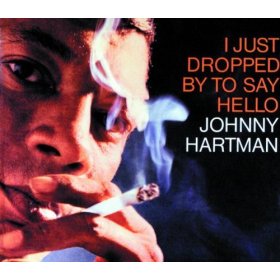
I don't remember the first time I heard Johnny Hartman, but I suspect it was over my dad's girlfriend's house. My parents separated when I was a youngin, and one of few benefits of the situation was that when I was with my dad I had the luxury of having him all to myself. But that changed when he met C. He was over her house all the time (or at least it seemed that way) and dragged me along for the ride. C had a bossy streak that ran afoul of my Taurus stubborness, so at times we clashed. She had a son of her own, so she wasn't trying to be my mama, but she was definitely from the "children-are-seen-but-not-heard" school. Our most memorable disagreement was about whether or not it was necessary for one to stir the butter into ones grits (Note: hell naw you ain't got to stir them grits!).

Grits aside, C was undeniably smart and cool--just like the Johnny Hartman album she kept on heavy rotation in her apartment. I remember his voice, butter-smooth or lion grizzled, mingling with the sandalwood incense my father loved so much.
Hartman never got the props he deserved (familiar story), but he did record a classic album with John Coltrane that everyone should own. Frank Sinatra couldn't fake the kind of cool that Hartman embodied.


Saturday, January 31, 2009

Michael Steele for President

Michael Steele is chairman of the Republican National Convention, but I have a funny feeling. Part of me wants to be happy for a brother doing good, but the rest of me wants to barf. I always had a (distant) feeling that their would be a Black president (never this early of course), but I thought the person would probably be somebody like Michael Steele. That didn't give me a good feeling.


I'm hoping that he will be able Republicans to try to not step so hard when they walk over the backs of the poor and colored. I'm not ready to assess the size of my hope, I just know that I have some hope.

But.

I have the feeling that his ascension is more placement than a revolution.


And that has me thinking. The language and possibility of politics has fundamentally changed over the last two or so years. The Republicans would have never picked Sarah Palin if it wasn't for Hillary Clinton. By the end of the general election, they were having Sarah Palin shout out Hillary like that was her dead homey or something. Now the Republican candidate proudly declares herself a feminist. Whatever it takes.

So, my thesis: Michael Steele and Sarah Palin are the bizarro Obama and Clinton.


Think about it. Obama and Clinton had to face doubts at every turn and had to scratch and fight for every inch they got. No one gave them a chane. But they got so good at it that they made it look easy. They are serious people who are among the greatest minds of their generation (especially Barack, sorry!). They were the first female and Black male candidates with a legitimate shot of winning the presidency. And they ran in the same year. Sometimes I think we forget how dope that was. I feel blessed to have witnessed it, even in its more painful moments.

And, on the other hand you have two candidtes who are somewhat (ahem) less distinguished.


***Excuse the digression, but: If Sarah Palin was smart, she would get some work boots and a pick axe and go save someone from somewhere. She needs to not be on the news whining about an election that people are ready to forget about anyway. The wrinkles caused by her overexposure are getting a little scary to look at. Sniff. You smell that? It reminds me of something. Oh, yeah, desperation.***


Michael Steele, seems like an empty suit. A product placement. Less profound than Steadman Graham. And he works for them. He represents the interests of the White overclass. For me that goes to the heart of his lack of credibility. But we'll see.

The Black Snob has an excellent profile of him in a column from the 2008 election that is a little more balanced. Definitely worth reading.

So when I thought this country would finally make the decision to elect a Black man for president, I figured it would have to be someone I didn't respect. Thank God I was wrong.

Monday, January 19, 2009

The Wisdom of Jericho Brown (Part 2 of 2)

Jericho Brown's got a new book of poetry out, Please, which is so funky and beautiful it hurts. One of the featured poems, "All That Crawls Beneath Me," was in last summer's Indiana Review Funk feature. Jericho drops some more knowledge on you.

1. What is your favorite Donny Hathaway song?


I've been listening to the "You Are My Heaven" duet with Roberta Flack as this is something I've been thinking about a good deal lately in the midst of reading and re-reading Ed Pavlic's Winners Have Yet to Be Announced.


Right now, I'm pretty sure that Hathaway's voice is somehow the saddest--yes, even sadder than Phyllis Hyman. Hyman manages sass and grit in upbeat disco numbers; Hathaway, on the other hand, takes a lyric like "I won't let them take you away" in a song as light as "You Are My Heaven" and focuses on the fear of actually being left alone. Something in his voice seems to see the awful in even the sweetest of expressions. A good example is the way in which Lalah Hathaway, his daughter, manages to fully mimic him in her version of "For All We Know" (The Song Lives On with Joe Sample) save for the tragedy in his version. It wasn't until I heard her version that I realized that the song was about trying to get some and using a really lame line to make it happen. In contrast, I always thought the song was about the real possibility of death arriving before the opportunity to make love when I listened to the late Hathaway sing it.

 
Hathaway is special. More than that, I believe he was at once conscious and unconscious of how special he and his voice is. We can't say that about Aretha Franklin: she knows good and well what she's doing every song, every God damned note.


But none of that answers what you asked me. While growing up, my favorite was “Song for You” because the piano in it always made me cry. No matter how many times I heard the bridge, I couldn’t get myself ready for it. It’s one of those songs that put my childhood in slow motion. I mean that literally. I thought it was some kind of magic. I could play that song and people who only knew how to yell would start whispering.


Donny Hathaway - A song for you
Uploaded by benedictinelight. - Music videos, artist interviews, concerts and more.

Lately, though, it’s been “For All We Know” because it’s really good for foreplay.

2. Funkier: Neck bones or Candied Yams?


Neckbones. Yams are too sweet.

3. What are you reading?


George Oppen and the really good unpublished manuscripts of Dwayne Betts, Jennifer Chapis, Deniz Perin, and Sasha West. It’s a great show. You gotta see it.

4. What advice would you offer a writer whose considering an MFA?


Go to the University of New Orleans. It’s the only MFA in town.